
10 South Florida Alternatives to Independent and Assisted Living
10 South Florida Alternatives to Independent and Assisted Living
Moving into an independent or assisted living community isn't the only option anymore, and here in South Florida, I'm seeing more people prove that every year.
For a lot of the people I work with, it's not even the first option they consider.
I've spent 14 years helping seniors downsize. I've sat at kitchen tables with adult children who are worried sick about a parent living alone. I've also sat with seniors who are absolutely not ready to give up their independence, and don't want to be told otherwise.
Here's what I've learned after all these years in the field. The choice isn't binary. It's not "stay in a house that's too big" or "move into a community." There's a whole range of options in between.
The right one depends on health, finances, the support someone has around them, and honestly, what kind of life someone wants to keep living.
Make sure to get my FREE Guides Here!
Independent Living vs. Assisted Living: What's the Difference
Before we get into alternatives, it helps to know what these two terms actually mean, because they get used interchangeably all the time and they're not the same thing.
Independent living is built for seniors who are still fully able to care for themselves. Think of it as a lifestyle community. Residents have their own apartment or cottage, and the community offers amenities like dining, housekeeping, transportation, and social activities. There's no medical care or hands-on assistance included. It's really about convenience and community, not care.
Assisted living is a step up in support. Residents still live independently in their own space, but they get help with daily tasks like bathing, dressing, medication management, and meals. Staff are on site, and there's a level of medical oversight that independent living doesn't offer.
The confusion between the two is part of why so many people feel stuck. They picture one when they mean the other, and it colors the whole decision. Once you know the difference, some of these alternatives make even more sense; a few of them, like 55+ active adult communities, actually sit closer to the independent living side than people realize.
The data backs this up too. A 2026 AARP tech trends survey found that 84 percent of Americans over 50 would rather age in place than move to an independent or assisted living facility.[1]
Other researchers have asked what seniors would choose if they could no longer live fully independently. The majority, 60 percent, said they'd rather stay home and receive care there. Only 18 percent chose assisted living.[2]
But I want to be honest with you about something, because I've seen it firsthand.
A few of the seniors I've worked with over the years were anxious, depressed, and in real physical pain living alone. Once they made the move into an assisted living community, it was like a light switch went off in them. Being around other people, having activities to look forward to, even just having meals with company again, made a huge difference. I watched it happen with my own real estate clients who sold their properties and downsized into that next chapter.
So this isn't a list that says independent or assisted living is the wrong choice. For some people, it's exactly the right one, and it can genuinely restore someone's quality of life.
This is a list for the people who aren't there yet, or who know it's not the right fit for their loved one right now. Here are 10 of the alternatives I see South Florida seniors and their loved ones choosing.
1. Aging in Place With Home Modifications
This is the most common choice, and the numbers show why.
Remodelers have reported a 76 percent jump in demand for aging-in-place renovations over the past five years, with the typical remodel now running around $9,500.[2]
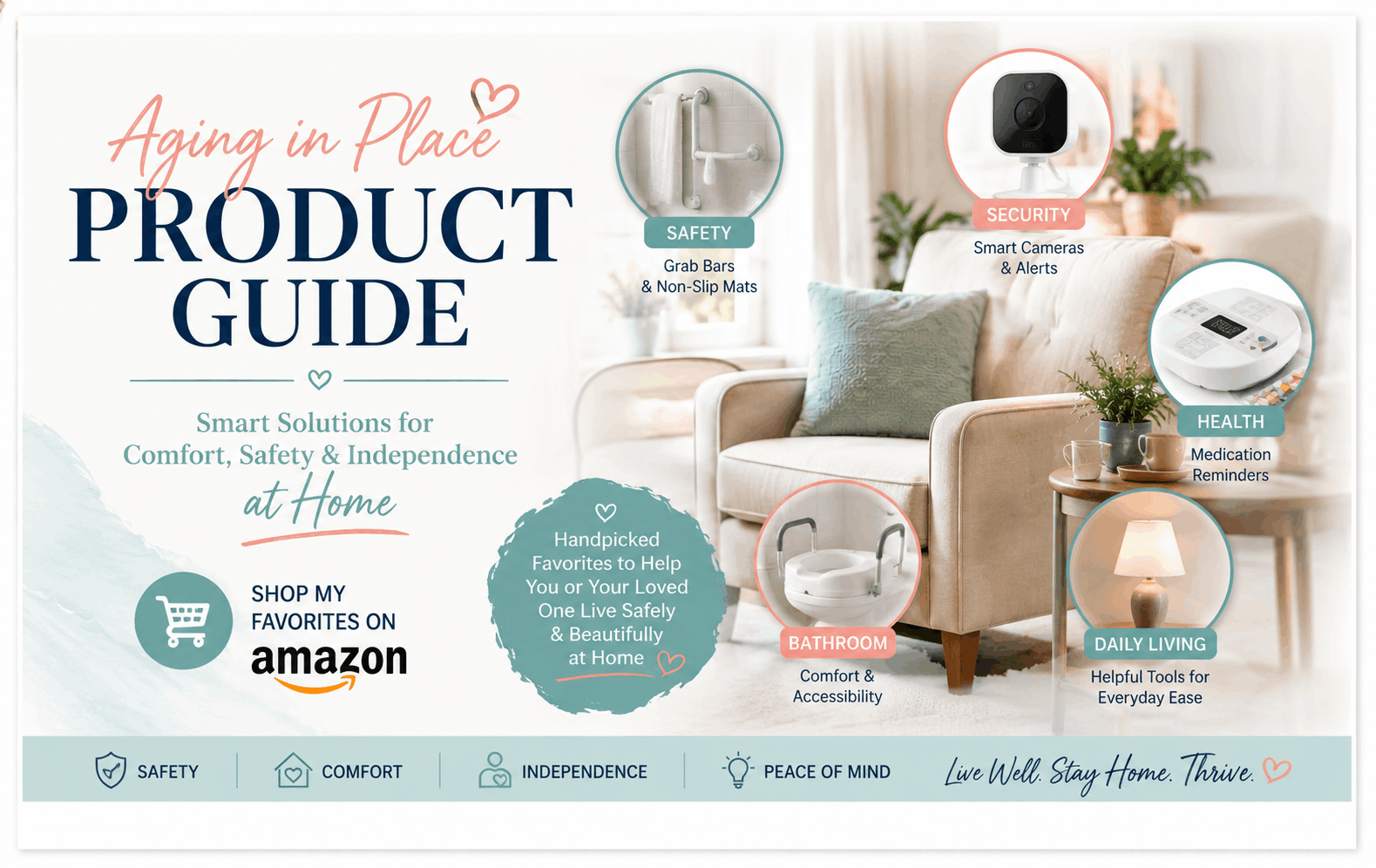
Grab bars, walk-in showers, stair lifts, better lighting, and smart home devices can extend independence by years. A lot of these upgrades also boost resale value if a move eventually becomes necessary.
Falls are the real reason this matters so much. More than 14 million adults 65 and older fall every year, roughly one in four seniors, and those falls send over 3 million people to the ER annually.[2]
I'll be honest, I never gave grab bars a second thought until I needed one myself.
I'm a fast walker, and over the years I've taken my share of spills. A flip flop caught in the hem of a long beach cover up. Tripping over my yellow lab Brody, who likes to lay quietly right behind me in the kitchen while I'm cooking or getting my coffee. And then there was my skateboard accident over Super Bowl weekend 2024. Long story, but I will say there was no alcohol involved, it happened at 10 in the morning. I severely tore my right hamstring and it sidelined my new love of pickleball for over a year.
The healing was brutal. On the drive home from a weekend in St. Augustine, we stopped at a Wawa, and I nearly cried with relief when I saw a grab bar in that bathroom. At 64 years old, I had never once needed to use one. But in that moment, in real pain, it made something as simple as using the restroom tolerable.
I list homes with grab bars in nearly every bathroom now. It took my own injury to understand just how much they matter.
A safer home isn't a luxury upgrade. It's often the thing that keeps someone independent for years longer, and sometimes, it's the thing that gets you through a hard week too.
Shop my curated Amazon list of items you may want to purchase for your aging in place lifestyle! (I get paid a small commission when you buy through these links)
2. In-Home Care Services
Rather than moving to where care is available, bring the care to them.
This ranges from a few hours a week of help with errands and housekeeping to full-time live-in caregivers. It's flexible, and it lets someone stay in the home they love.
I've worked with a number of South Florida seniors and their loved ones who went this route first, before ever considering a move. For some, it's a bridge. For others, it's the long-term answer.
3. Downsizing to a Smaller, Single-Level Home
Sometimes the real problem isn't the community, it's the house. Two stories, a big yard, too many stairs, all things I see constantly in the older South Florida neighborhoods I sell in.
Moving to a smaller single-level home in the same South Florida neighborhood keeps the social ties and independence intact while removing the physical strain. This is one of the moves I help clients make most often, and it's usually a relief the moment the boxes are unpacked.
4. Accessory Dwelling Units (ADUs) or In-Law Suites
Building or converting a space on an adult child's property gives seniors their own private space with loved ones close by.
It's one of the fastest-growing trends I'm seeing right now, especially here in South Florida.
5. Co-Housing With Friends or Relatives
Some South Florida seniors are choosing to share a home with siblings, longtime friends, or even other retirees.
Split the costs, split the chores, and you get built-in companionship. This one takes the right personalities, but when it works, it works beautifully.
6. 55+ Active Adult Communities
This one actually falls closer to independent living than most people realize, and South Florida has no shortage of them. These are lifestyle-focused communities built around golf, pools, clubs, and social calendars.
No medical care or hands-on assistance on site, just neighbors in the same season of life.
7. Village Networks
This one surprises people. "Villages" are membership-based, community-run networks that connect seniors with volunteers and vetted service providers for transportation, home repairs, and social events, all while staying in their own home. A few of these networks have started popping up in South Florida too.
Isolation is a real concern behind this option. One recent poll found that a third of adults between 50 and 80 felt lonely in the past year, and almost as many felt socially isolated.[3]
A village network is one of the few alternatives built specifically to solve that, without asking anyone to leave home.
8. Adult Day Programs
For loved ones providing care themselves, adult day programs offer structured activities, meals, and supervision during the day.
It gives caregivers a break and gives seniors social interaction and routine.
9. Technology and Monitoring Systems
Medical alert devices, fall detection sensors, and video check-in systems have gotten so much better.
For those worried about a loved one living alone here in South Florida, this can be the missing piece that makes independent living feel safe again.
10. Shared Housing Programs
Some South Florida areas have formal home-sharing programs that match seniors who have extra space with a compatible housemate, sometimes a younger person who trades reduced rent for help around the house.
It solves loneliness and cost at the same time.
The Bottom Line
Independent and assisted living communities absolutely have their place. I've seen with my own eyes what a positive difference the right community can make for the right person.
But they're not the only path forward, and they're not the right fit for everyone, at least not yet.
If you're weighing this decision for yourself or a parent, start with an honest look at health, finances, and what kind of daily life feels right. Then work backward from there.
I've worked with many seniors and their loved ones here in South Florida who, for a variety of reasons, didn't want or weren't able to move into an independent or assisted living community. If that's where you are right now, I hope this gave you a few paths to think through.
And if you or your loved ones are navigating a downsizing decision, or a probate or inherited property situation tied to aging in place, I'd love to help you think it through.
Michele Bellisari is a Florida Realtor, Seniors Real Estate Specialist (SRES), and Certified Probate Specialist, and the founder and a graduate of The Probate Listing Lab. Please schedule at time to chat about your personal situation, click here!
Sources
- AARP 2026 Tech Trends Survey, cited in "12 Senior Care Trends to Watch In 2026," Rising Trends — https://www.risingtrends.co/blog/senior-care-trends-2026
- RubyHome, "Aging in Place Statistics" — https://www.rubyhome.com/blog/aging-in-place-stats/
- Retirement Living, "Aging In Place Statistics 2026" — https://www.retirementliving.com/aging-in-place/aging-in-place-statistics
Categories
Recent Posts